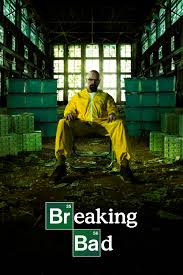
Breaking Bad (2008-2013) - TV Series Review
Vince Gilligan's Breaking Bad is not just a television series—it's a cultural phenomenon that redefined what TV drama could achieve. Premiering in 2008 as a mid-season replacement on AMC, this five-season saga about a chemistry teacher's transformation into a drug kingpin became one of the most acclaimed shows in television history. Seventeen years later, it remains the gold standard for character-driven storytelling.
The Perfect Setup
The premise is deceptively simple: Walter White (Bryan Cranston), a mild-mannered high school chemistry teacher, learns he has terminal lung cancer. Facing financial ruin and wanting to secure his family's future, he teams up with former student Jesse Pinkman (Aaron Paul) to cook and sell high-purity methamphetamine.
What begins as a desperate bid to pay medical bills becomes a journey into moral ambiguity, criminal enterprise, and personal transformation. Walter's descent from everyman to Heisenberg is both horrifying and fascinating, a masterclass in how circumstances can corrupt character.
Bryan Cranston's Defining Performance
Cranston's portrayal of Walter White is arguably the greatest performance in television history. He captures the character's complexity with breathtaking nuance—from the frustrated teacher who feels unappreciated, to the brilliant chemist who finds purpose in criminality, to the ruthless drug lord who embraces his dark side.
The physical transformation is remarkable: Cranston loses 30 pounds for the role, his face hardening from disappointment to menace. But it's the internal transformation that captivates—the way Walter justifies his actions, rationalizes his crimes, and eventually embraces his monstrous nature.
A Supporting Cast of Equals
Aaron Paul's Jesse Pinkman evolves from comic relief to tragic figure, his journey from small-time dealer to conflicted anti-hero providing crucial emotional contrast to Walter's descent. Paul delivers some of the series' most heartbreaking moments, particularly in the later seasons.
Anna Gunn's Skyler White is brilliantly complex—a woman who starts as a concerned wife and becomes a fierce protector of her family. Gunn brings depth to a character often criticized for being unsympathetic, showing the toll Walter's choices take on those around him.
The Slow Burn Mastery
Gilligan's writing is methodical and patient. The series builds tension gradually, each episode advancing the plot while deepening character development. The pacing is impeccable—never rushed, never boring, always compelling.
The show's exploration of moral ambiguity is profound. Walter's actions become increasingly monstrous, yet we understand his motivations. The series asks: how far would you go to protect your family? At what point does the ends no longer justify the means?
Visual and Technical Excellence
Michael Slovis's cinematography captures the stark beauty of the New Mexico desert, contrasting with the gritty urban environments. The use of color—particularly the signature green of money and meth—becomes symbolic throughout the series.
The sound design is exceptional, from the iconic opening guitar riff to the subtle audio cues that heighten tension. The practical effects and stunt work ground the increasingly outrageous plot in reality.
Season-by-Season Evolution
Each season represents a different phase of Walter's transformation. Season 1 establishes the premise; Season 2 introduces larger stakes; Season 3 brings empire-building; Season 4 escalates the violence; Season 5 delivers the devastating conclusion.
The series never loses momentum, with each season ending on cliffhangers that make waiting unbearable. Yet the overall arc feels organic, each development flowing naturally from the characters' choices.
Cultural Impact and Legacy
Breaking Bad revolutionized television, proving that cable shows could achieve cinematic quality. It influenced countless series that followed, from Narcos to Ozark, setting new standards for anti-hero storytelling.
The show's exploration of the American Dream's dark side—the idea that success requires moral compromise—resonates deeply in our achievement-obsessed culture. Walter White becomes a cautionary tale about the dangers of unchecked ambition.
The Final Verdict
Seventeen years after its premiere, Breaking Bad remains television's most perfectly crafted series. It combines brilliant writing, extraordinary performances, and unflinching moral complexity into something truly extraordinary.
The series doesn't just entertain—it challenges us to examine our own capacity for good and evil. In Walter White, we see ourselves reflected back, and the image isn't always pretty. That's what makes Breaking Bad not just great television, but essential viewing.
In a medium often criticized for being disposable, Breaking Bad proves that TV can be as ambitious, as profound, and as enduring as the greatest literature. It's not just a show about making meth—it's about what it means to be human.
You Might Also Enjoy