The Matrix (1999) - Film Review
The Wachowskis' The Matrix didn't just arrive in 1999—it exploded onto screens like a virus in the system. In an era of CGI experimentation, here was a film that didn't just use digital effects, but built an entire philosophy around them. Twenty-five years later, it remains a benchmark for what revolutionary cinema can achieve.
The Red Pill Moment
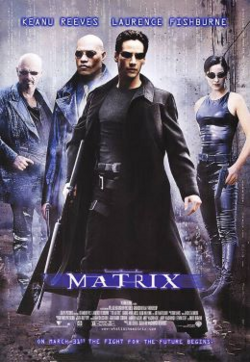
The film's premise is deceptively simple: Thomas Anderson (Keanu Reeves), a computer programmer by day and hacker by night, discovers that the world he knows is a simulation. "The Matrix" is a digital prison created by machines to keep humanity docile while using us as batteries. With the help of Morpheus (Laurence Fishburne) and Trinity (Carrie-Anne Moss), Neo must choose between the comfortable illusion of the blue pill or the harsh reality of the red pill.
This central metaphor—questioning the nature of reality itself—resonates as powerfully today as it did in 1999. In our world of deepfakes, virtual reality, and AI, The Matrix feels more relevant than ever. It's not just a sci-fi action movie; it's a philosophical inquiry wrapped in bullet time.
Groundbreaking Visual Innovation
The film's visual effects were revolutionary. The "bullet time" sequence, where cameras appear to orbit around Neo in slow motion as bullets fly past, became instantly iconic. John Gaeta's team pioneered techniques that would influence every action film that followed.
Yet the effects never overwhelm the story. The green-tinted "real world" of the Matrix contrasts beautifully with the grimy, industrial Zion. Every visual choice serves the narrative, from the cascading green code that represents the Matrix's underlying structure to the stark, utilitarian design of the Nebuchadnezzar.
Action That Redefined the Genre
The fight sequences are legendary. Neo's training in the dojo, the lobby shootout, and the final confrontation with Agent Smith all blend martial arts, gunplay, and wire work in ways that felt fresh and exhilarating. Yuen Woo-ping's choreography brings a balletic grace to the violence, making the action both brutal and beautiful.
The film's sound design is equally impressive. The metallic clang of bullets hitting surfaces, the whoosh of dodged attacks, and Don Davis's industrial score create an auditory landscape as memorable as the visuals.
A Cast That Embodies the Vision
Keanu Reeves was the perfect choice for Neo—his quiet intensity and everyman quality made the character's transformation believable. Laurence Fishburne brings gravitas and wisdom to Morpheus, delivering some of the film's most memorable dialogue. Carrie-Anne Moss is fierce and capable as Trinity, proving that action heroines could be both strong and complex.
Hugo Weaving's Agent Smith is chillingly inhuman, his performance elevated by motion capture that makes him feel like a true digital entity. The supporting cast, including Gloria Foster as the Oracle and Joe Pantoliano as Cypher, add depth to this digital world.
Philosophy in the Action
Beneath the spectacle lies genuine philosophical inquiry. The film explores free will, the nature of consciousness, and the ethics of artificial intelligence. Morpheus's speech about the desert of the real—"Welcome to the desert of the real"—has become part of our cultural lexicon.
The Wachowskis draw from diverse philosophical traditions, from Plato's cave allegory to Jean Baudrillard's concepts of simulation and hyperreality. Yet they never let the ideas overwhelm the entertainment value.
A Cultural Phenomenon
The Matrix didn't just influence filmmaking—it changed popular culture. Its visual language inspired countless imitators, its philosophical questions sparked endless debates, and its action sequences set new standards for what was possible in cinema.
The sequels may have been uneven, but the original film stands as a perfect encapsulation of late-90s cyberpunk culture. It captured the zeitgeist of an era on the cusp of the digital revolution, asking questions about technology and humanity that remain urgently relevant.
Legacy of Innovation
Twenty-five years after its release, The Matrix still holds up as a technical achievement and cultural touchstone. It proved that blockbuster filmmaking could be both intellectually engaging and visually stunning. In an industry increasingly focused on franchise continuity, it reminds us what original, visionary cinema can accomplish.
The red pill or the blue pill? For cinema lovers, the choice is clear: embrace the wonder of what movies can be.
You Might Also Enjoy